
Since 2020, I have been utilizing the Arlo Pro 2 for my security needs. Although initially wireless, I eventually opted to hardwire a charging cable after a brief period. This decision was made due to the inconvenience of frequent battery recharging. One notable drawback I’ve experienced is that the batteries tend to have a shorter lifespan in cold temperatures, necessitating more frequent replacements or recharges.
I was in search of an affordable camera for indoor garage monitoring and discovered the Imou Bullet 2C at a reasonable price. The setup was incredibly straightforward since it can connect to either Wi-Fi or Power over Ethernet (PoE). Moreover, unlike the Arlo Pro 2, it doesn’t necessitate a hub, simplifying the overall installation process.
The Imou Camera boasts superior quality and quicker motion detection compared to its counterpart. Additionally, it exhibits significantly low latency, with a mere 0.5-second delay when viewing the live feed. In contrast, the Arlo had a latency ranging from 7 to 10 seconds in my experience.
Daytime and Night vision
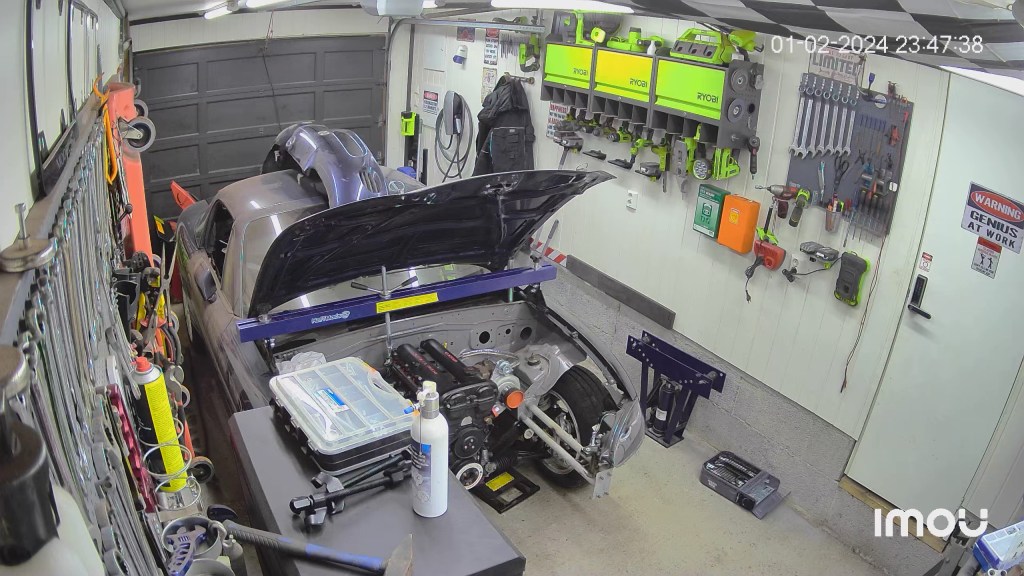
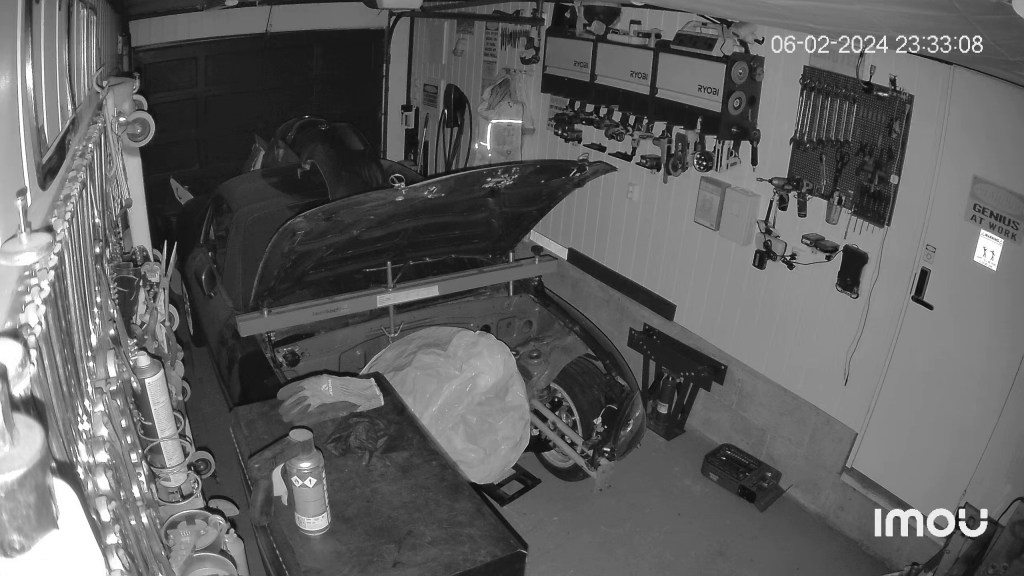
Having utilized two Bullet cameras, one stationed in my backyard, I made the decision to switch from the Arlo system to the Smart Outdoor Wireless Security Kit after a month of use. The Imou app proved to be instrumental in this decision, offering an intuitive and user-friendly interface that facilitated effortless remote monitoring of my property. The app’s functionality and responsiveness played a pivotal role in making the transition.
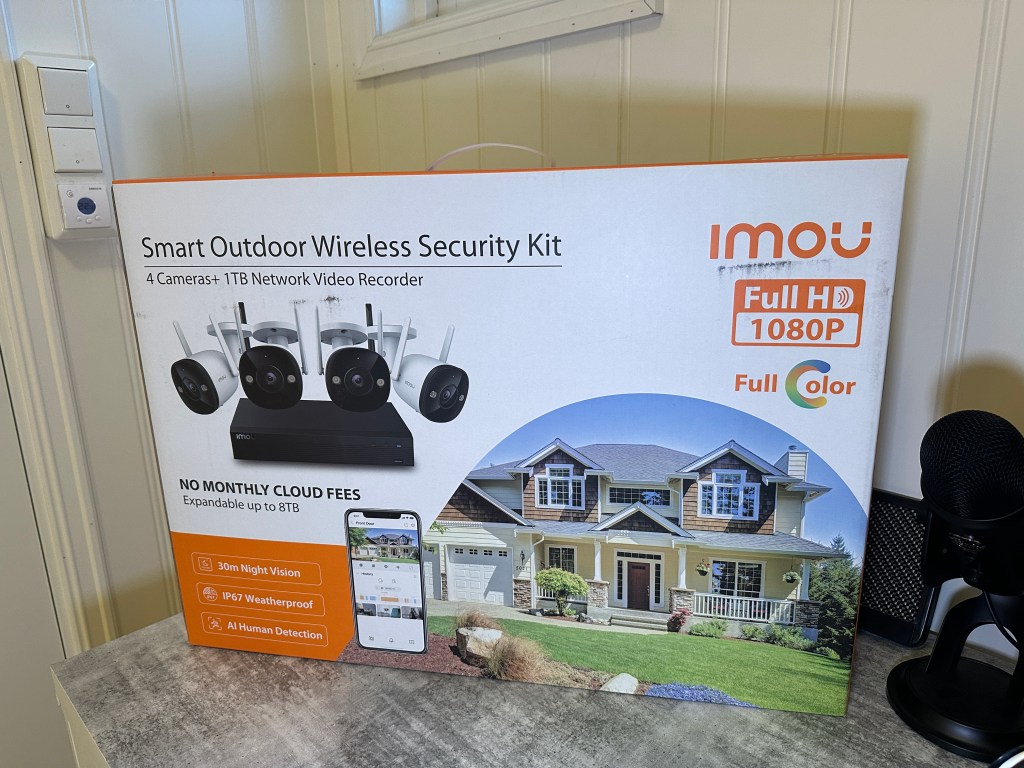
The package I acquired includes four cameras equipped with LED and a siren, along with an NVR featuring a 1 TB HDD.
The box:
Contents:
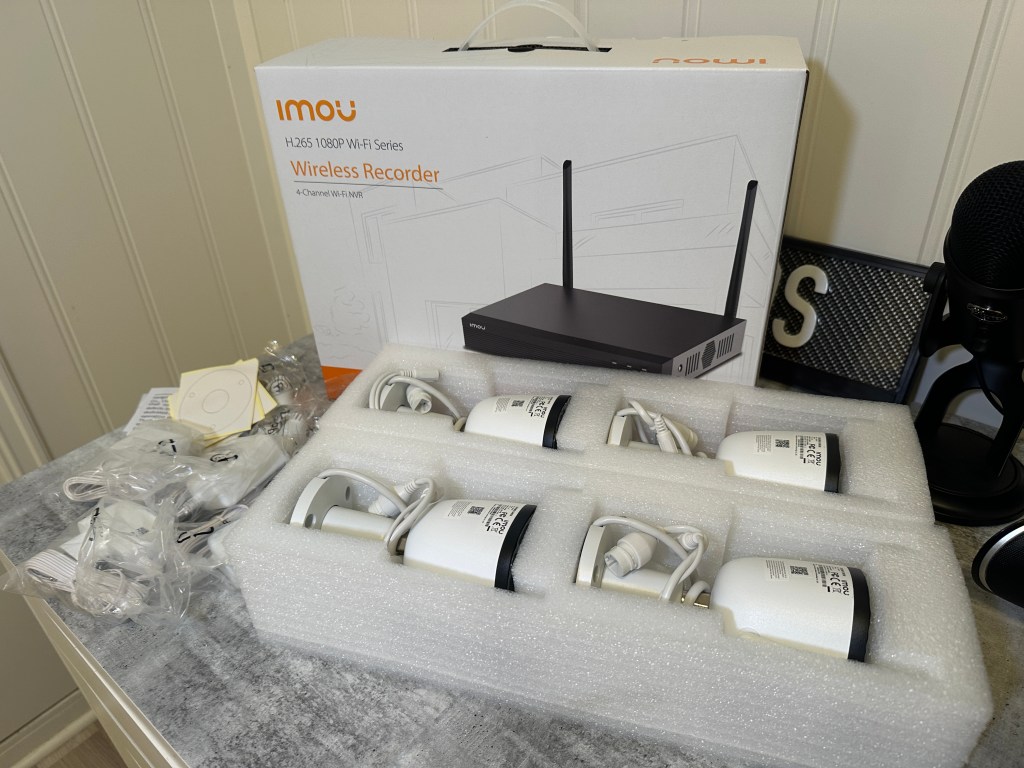
The NVR:
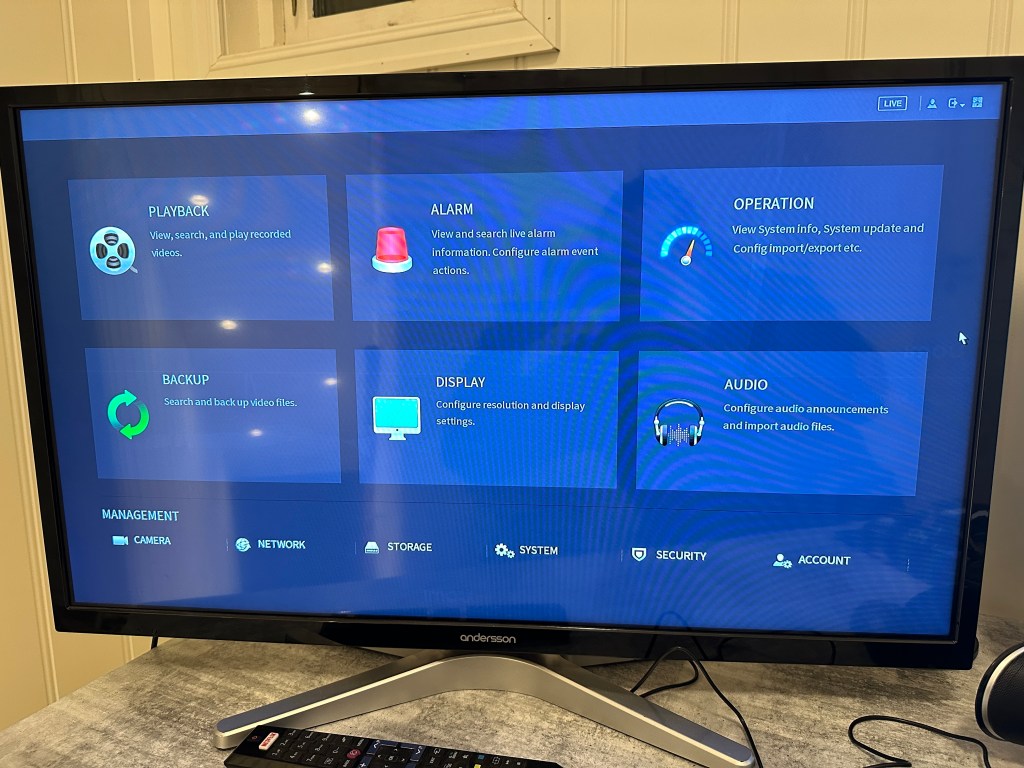
The NVR features both VGA and HDMI outputs, and it comes with an optical mouse for convenient setup, review, and viewing, eliminating the necessity for an app or a computer.
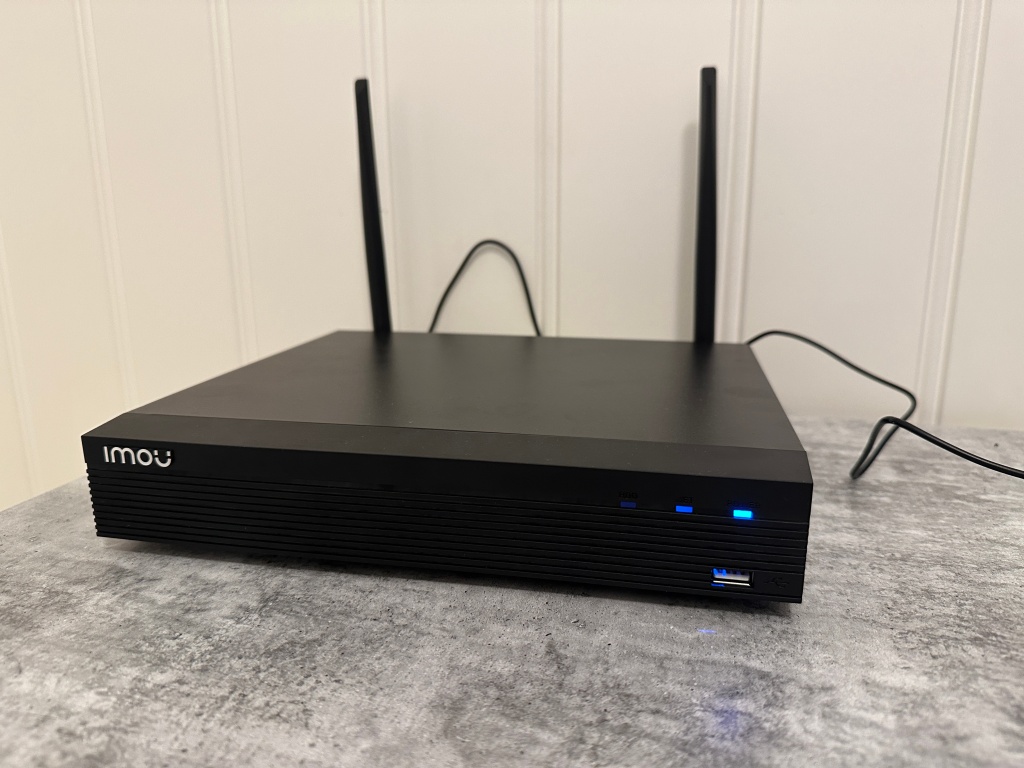
Small and discrete. Keep in mind that the wifi in the NVR is for connecting cameras only. And it needs LAN to connect to internet.
Conclusion:
Overall, what I appreciate most is the user-friendly nature of the app. It allows for the setup of activation zones without requiring a monthly fee. Additionally, the app enables manual activation of both light and siren features. The quality is impressive, offering high detail in performance. I may consider updating this article with more insights after further use, but it’s been excellent so far.
Disclaimer:
This article is not sponsored, and the views expressed herein are solely those of the author. The author has not received any form of compensation, financial or otherwise, for the creation of this content. Any references to products, services, or entities are based on the author’s genuine opinions and experiences, without any promotional agreements or endorsements.
Readers should be aware that the information provided is for general informational purposes only. While efforts have been made to ensure accuracy, the author does not guarantee the completeness or current relevance of the content.
This article does not constitute professional advice, and readers are encouraged to seek appropriate counsel or conduct their own research for specific needs or circumstances. The absence of sponsorship ensures independence and impartiality in presenting information.
The author appreciates the readers’ trust and strives to deliver content that is transparent, unbiased, and informative.
 hoffmods.com
Leave a comment